
Analysis
Calculations and comparisons on pensions, investment products and the real cost of financial advice in Germany.
Back to the future(s)
This blog post is a bit different than all previous ones: it's rather technical, and goes specifically into some of the recent changes I made in the Foundations App.

Coming soon to a broker near you: Riester 2.0
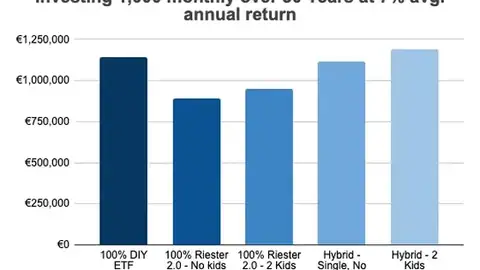
TL;DR: Riester 2.0’s fee cap has been lowered from 1.5% to 1%, and the incentives have been restructured. That narrows the gap with independent investing considerably: the optimized strategy (investing only up to the subsidized amount in Riester 2.0, the rest independently) now beats a pure ETF portfolio for everyone, and maxing out the plan only trails it without kids. But it only works if you stay in Germany, and the amounts involved are too small to fix anyone’s pension on their own.
Low, lower, German state pension
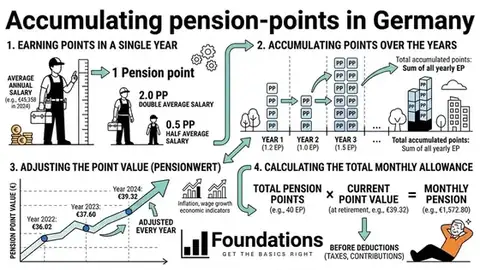
TL;DR: Comparing your mandatory state pension contributions to what the same money could earn as a real investment: across multiple income scenarios and withdrawal rate I tested, the state pension performs like an investment returning roughly 0.05%–3.3% a year, which in most cases is below inflation. In real terms, it's losing you money.
The new and improved "Riester 2.0"
TL;DR: The proposed Altersvorsorgedepot ("Riester 2.0") drops the old capital guarantee, finally allowing low-cost ETF investing, and includes significant incentives. But with fees capped at 1.5% p.a., it's not always better than a simple DIY portfolio even with the incentives you get. Read on to see in which cases it does beat a simple, DIY portfolio.
TANSTAAFL - Part II
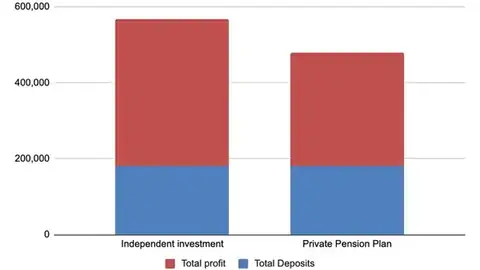
In the first part of this post, I tried to show just how expensive “free” consulting might be for you. My point here is simple - financial brokers have to sell you certain products, because that’s the only way they get compensated.

There Ain't No Such Thing As A Free Lunch: Understanding Financial Consulting Costs
At the time of writing this, there are a total of 41,050 financial consultants and brokers registered in Germany. Of these, only 331 are independent consultants (34h Honorar-Finanzanlagenberater). You read that right: 331. That’s around 0.8%. By the way, I'm one of the 331 :)